NATURAL DISASTER.
NATURAL DISASTERS

A natural disaster - such as an earthquake, tsunami and hurricane - can overwhelm an entire population within minutes. Thousands of people may be killed and many more left injured or traumatized by the loss of friends, families and homes. In the face of such events, Médecins Sans Frontières / Doctors Without Borders (MSF) can deploy a rapid response to save lives and support survivors.
Over decades, we have built up a network of experienced staff and a system of logistical support that means we can mobilize fast to reach disaster-hit communities in complex environments with the emergency medical and psychological care they need.
In large-scale disasters, local hospitals may also be damaged or destroyed, while vital infrastructure such as transport and clean water supplies can fail. This can lead to issues like disease outbreaks just when health systems are least able to help. So, we also deploy logistical teams and water and sanitation expert to help stabilize healthcare systems and protect survivors.
Natural disasters are the result of a hazard overwhelming highly vulnerable community, often resulting in mortality and morbidity. Over the past decade, over 300 natural disasters occur yearly around the world affecting millions and cost billions. The disaster cycle is a framework used to base a coordinated plan to respond, recover, prevent, and prepare for a disaster. Access to clean water, proper sanitation, food/nutrition, shelter, and the threat of communicable diseases are concerns that have the potential to be detrimental to the management of a natural disaster, slowing the recovery process.
Natural disasters are common, devastating and impact a large
number of people annually. In recent years, there have been a series of
major natural disasters including earthquakes in Haiti (2010),
earthquake followed by a tsunami in Japan (2011) and Nepal (2015),
floods in Pakistan (2013 and 2010) and India (2013), hurricanes in the
United States (2005 and 2012), and typhoons in Philippines (2011 and
2013). The impact of such large disasters is tremendous. For example, in
2010 the Center for Research on the Epidemiology of Disaster (CRED) reported 436 disasters worldwide accounting for 328 634
deaths. These numbers are particularly alarming since natural disasters
are increasing – a trend experts predict will continue due to global
climate change. The culmination of climate change and other challenges
such as poverty, population growth, and increased urbanization is
expected to compound disasters intensifying them and the damage they
cause (Leaning and Guha-Sapir, 2013). This situation is
particularly challenging for low-income countries since they lack the
resources to prepare, mitigate, and respond to natural disasters.
Natural disasters represent major development setbacks for low-income
countries; however, the prevention and reduction of natural disasters
are seldom priorities in development strategies (Andra de DA Silva and Caterina, 2012).
# Consequences of Natural Disasters:-
Natural disasters have a significant impact on the public health and well-being of populations affected. Negative health impacts can be direct (e.g., injuries) or indirect (e.g., malnutrition and increase in infectious diseases). In the aftermaths of a natural disaster, these health issues are compounded by the damage done to health systems, water and sanitation infrastructure, and the displacement of communities affected. Displacement is quite common after major natural disasters due to increased homelessness. In 2014, the Center for Research on the Epidemiology of Disasters (CRED) estimated that 1 298 848 people were left homeless due to natural disasters. In the immediate aftermath of a disaster, majority of displaced populations live in temporary crowded shelters with little to no access to water and food especially during the first few days. Such living conditions are ideal for the spread of infectious diseases increasing morbidity and mortality among the displaced populations. There are many infectious diseases known to spread in such crowded environments including diarrhea diseases, measles,bacterial meniscus acute respiratory disease, malaria and dengue,fever, and tetanus, among others. Consequently, to respond to a natural disaster, public health workers have to treat injuries that require immediate medical attention while also implementing systems to prevent and reduce the spread of infectious diseases.
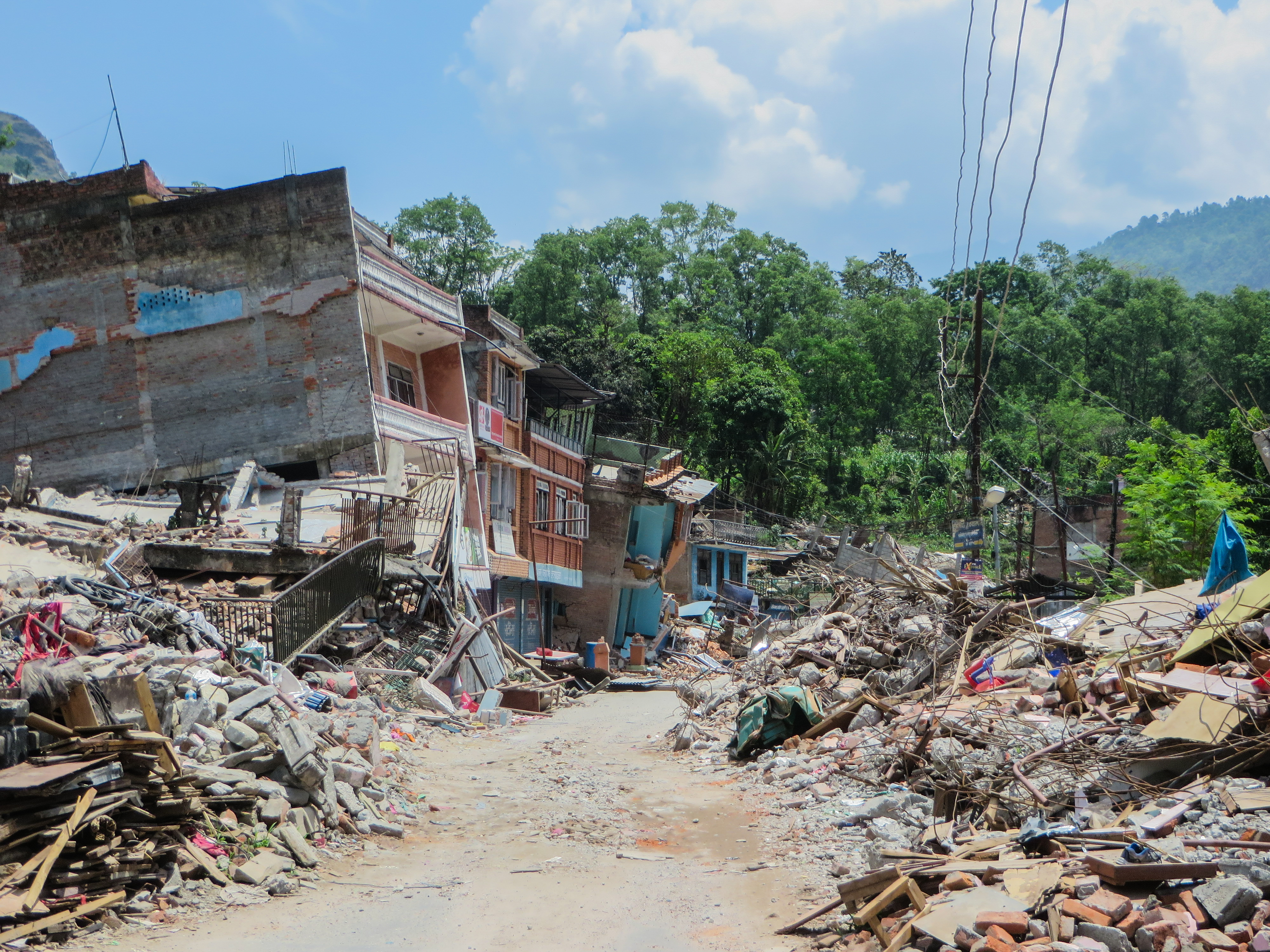
Natural disasters also cause a huge economic burden. From 2000 to 2009, natural disasters caused $891 billion in damage worldwide (Keller and Sparks, 2012). The high cost of natural disasters is attributed to their destruction of expensive and essential infrastructure (e.g., roads and buildings). In terms of health and economic losses, low-income countries are disproportionately affected by natural disasters. Even though high-income countries have higher industrial damage when natural disasters occur, the proportion of losses in relation to the gross national disease demonstrates a higher financial burden for low-income countries (McDermott et al., 2011). This increases foreign aid dependency for low-income countries since they need additional funding for reconstruction and economic recovery efforts. These challenges illustrate the need to link emergency disaster response efforts to long-term development projects to sustain recovery.
Natural disasters provide striking observations into the role of vulnerability in explaining patterns of loss among peoples and regions. Hazards become disasters when a perturbation overwhelms the capacity of a population or place to adapt or cope. Natural disasters have received substantial attention in the literature, stemming largely from research by Gilbert White of the University of Chicago in the 1980s on the theorization of human exposure to environmental extremes and the human behavior that lead to poor disaster management policy. Impacts of recent hurricanes and heat waves show that even rich countries are not well prepared to cope with extreme climate-related disasters.
Although considerable progress has been made in mapping and understanding vulnerability to natural disasters, there are no predictive models of disaster risk. The two main reasons for this are a lack of available sub national data and a lack of consideration of multiple multi scalar hazards. The interaction of multiple hazards, including perturbations with stressors, has not yet been characterized with much certainty and thus can lead to unpredictable outcomes and unanticipated impacts. For example, the total effect of Hurricane Katrina, which made landfall along the north-central Gulf Coast of the United States in 2006, is thought to be a result of local environmental degradation, shifts in regional and national administrative priorities, weaknesses in the preparedness and response of local and national institutions, and an extreme environmental event.
By:-Shubham Sharma.
Very well written 👍
ReplyDeleteGood working
ReplyDeleteWell done keep it up brother👍
ReplyDeleteNice work
ReplyDeleteGood choosen content
ReplyDelete